Calculate your estimate
Use measured inputs or actual supplier values. Results update instantly.
Rectangular in-place bank excavation
Swell ratio must be supported by site-specific data; does not establish safe excavation geometry. Verify quantities with your supplier.
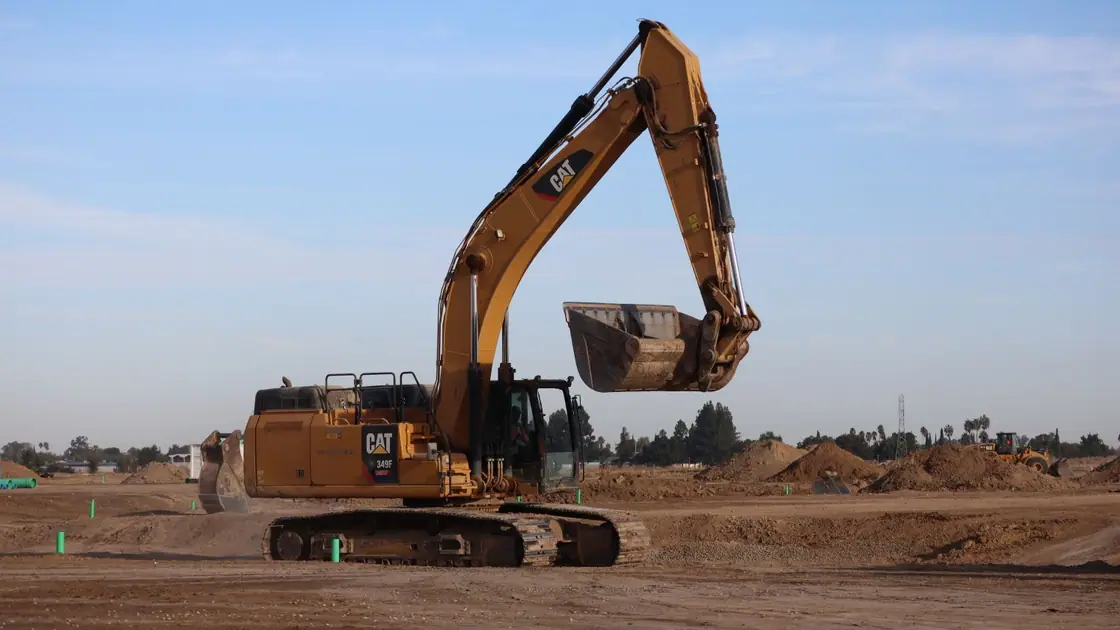
Excavation projects use cubic yards, but the volume in undisturbed ground may not match the loose material carried away by a truck or the compacted material placed back in a trench. This calculator separates the geometric in-place volume from an optional user-provided swell ratio.
Calculate excavation cubic yards from trench or pit dimensions
For a uniform rectangular excavation, multiply length × width × depth in feet to find cubic feet and divide by 27. A trench 50 feet long, 6 feet wide and 2.5 feet deep has 50 × 6 × 2.5 ÷ 27 = approximately 27.78 bank cubic yards of geometric in-place excavation.
Bank volume is the material in its original undisturbed position. A cut with sloped sides, benches, unstable ground, pits or changing grade requires an appropriate geometry rather than the simple rectangular formula. If the excavation is a truncated or wedge-shaped form, derive a separate volume for the actual shape.
Enter dimensions in feet and review the bank volume before applying any optional swell percentage. The calculator cannot verify trench safety, wall support, permit requirements or ground-water conditions.
Bank cubic yards versus loose cubic yards
Bank cubic yards (BCY) measure earth before excavation. Loose cubic yards (LCY) describe the bulk volume after excavation, when the material structure has been disturbed and the void ratio may have changed. That increase is commonly called swell. The quantity loaded into a dump truck can therefore exceed the bank volume taken from the cut.
The Federal Highway Administration's earthwork guide ↗ explains that excavated material changes volume during handling and placement. Appropriate swell or shrink factors depend on material condition and project circumstances; a generic soil category is not a guarantee of any specific percentage.
If the project supplies a valid swell factor, calculate loose volume as bank cubic yards × (1 + swell percentage ÷ 100). A user-entered value is a scenario, not an engineering default. If no factor is known, rely on the bank estimate and obtain material-specific information before committing truck capacity.
Excavation depth and geometric volume table
The table uses a rectangular 100-square-foot footprint with a constant excavation depth. It is useful for quickly checking arithmetic, but it does not include required safe slopes, shoring, trench boxes or bench geometry.
| Excavation depth | Cubic feet | Bank cubic yards |
|---|---|---|
| 1 ft | 100 ft³ | 3.70 BCY |
| 2 ft | 200 ft³ | 7.41 BCY |
| 3 ft | 300 ft³ | 11.11 BCY |
| 4 ft | 400 ft³ | 14.81 BCY |
| 6 ft | 600 ft³ | 22.22 BCY |
Worked example: loose hauling volume with supplied swell data
Suppose a survey-based rectangular cut is 20 bank cubic yards, and the earthwork project documents a 20% swell factor for the actual material. The scenario's loose volume is 20 × 1.20 = 24 loose cubic yards. That number is not a claim that every soil swells by 20%; it is the result of the factor stated for this example.
If a truck has a nominal 8-cubic-yard loose material bed capacity, 24 LCY would mathematically require at least three bed-volume trips. But its legal payload weight could force smaller loads, so verify material bulk density and the vehicle rating before calculating trips. The dump truck load calculator evaluates both constraints.
Trenches, pipes and backfilling are separate takeoffs
Gross trench excavation volume is not necessarily the volume of material needed for backfill. The trench may later contain a pipe, conduit, concrete structure, drainage rock or a bedding layer. Subtract the volume occupied by these items from the intended backfilled void when their dimensions are known.
For example, a 30-foot-long trench with a 2 × 3-foot rectangular cross-section has a gross volume of 30 × 2 × 3 ÷ 27 = 6.67 BCY. If a specified pipe and bedding occupy a portion, the volume of new soil needed after installation will be less than that gross void. Treat the excavation quantity and the imported fill quantity as two separate line items.
See the fill dirt calculator for compacted fill and material suitability considerations.
Excavation with sloped sides or changing grade
An excavation with sloped sides is not a rectangular box whose depth equals the maximum cut depth. The upper footprint can be larger than the bottom footprint, and there may be benches or batter slopes. A simple approach for some engineered shapes is to divide the cut into prisms and wedges with known dimensions, but complex jobs need cross-section or surface-based earthwork models.
Where existing and proposed elevations vary, survey points or grading plans should drive the estimate. A guessed average depth across irregular terrain can materially understate haul or disposal quantities. Never decide safe trench or slope geometry using volume estimates alone.
Cost, transport and stockpile planning
Excavation cost includes much more than cubic yards removed: equipment, labor, hauling distance, disposal fees, stockpile space, moisture, access and possible dewatering can matter. Some unsuitable material may require special handling. The calculator offers volume planning rather than site-specific prices.
Ask how haulers measure or bill each load and whether they use bank yards, loose yards, short tons or trips. Legal payload can limit a truck even when its bed is not full. Use the material delivery checklist before scheduling heavy vehicle access.
Safety and professional limitations
Excavation introduces hazards from collapse, buried utilities, equipment and groundwater. Geometry alone does not establish safe entry, trench support, appropriate slopes or whether a permit is required. The site does not provide excavation safety procedures or substitute for trained supervision and applicable regulations.
Record the shape, measured dimensions, source of any swell factor, expected earthwork material and haul units. For structural foundations, utility trenches or substantial grade changes, use approved drawings and competent site assessment.
Why stockpile appearance cannot replace surveyed cut volume
A pile of excavated material has an irregular shape and contains voids. Estimating its volume from one height and diameter can be inaccurate, especially when the footprint is not conical or material is spread unevenly. For a known excavation, the measured bank cut and a valid swell factor usually provide a clearer starting point for hauling.
If a stockpile must be measured directly, use a suitable survey or volumetric method rather than an unverified visual guess. The calculator models a rectangular cut, not an irregular material mound. It should not be used to infer legal truck load weight from pile size.
Distinguish overbreak from the planned excavation geometry
Overbreak is material removed beyond the planned excavation limits. Rock excavation, irregular ground, machine access and required safe slopes can change the actual cut shape. A design that calls for a narrow trench may require a larger excavation footprint in practice for safety or access, but those dimensions must come from the correct project plan.
Estimate the designed quantity and any measured or planned additional excavation separately. Do not add an arbitrary margin as a substitute for safe excavation design. For professional projects, actual payment quantities may be governed by the contract's measurement method rather than the apparent loose stockpile volume.
Frequently Asked Questions
How do I calculate cubic yards in a trench?
For a rectangular trench, multiply length × width × depth in feet and divide by 27. For tapered or irregular cuts, use the actual geometry.
What is a bank cubic yard?
A bank cubic yard measures one cubic yard of soil in its original, undisturbed position before excavation.
What is a loose cubic yard?
It measures excavated or stockpiled material after disturbance. Loose volume can exceed in-place bank volume.
Is 20% swell standard for all excavated dirt?
No. Swell varies by the actual soil, rock and moisture state. Use a documented project-specific factor instead of a default percentage.
Does the calculator tell me how to slope a trench?
No. It estimates geometric volume only and does not design trench stability or safety systems.
How many truckloads for a 30-cubic-yard excavation?
First distinguish bank from loose volume, then consider the truck's usable bed volume and legal payload; without those details there is no reliable number of trips.
Is excavation volume the same as backfill volume?
Not necessarily. Pipes, bedding and structures reduce the void to be refilled, while soil compaction changes the material-state volume.
References and calculation limits
Exact unit relationships are mathematical; material properties, practical ordering factors and local conditions require supplier or project-specific verification. The following publications support the relevant technical context.
For the site's core formulas and density limitations, see our Calculation Methodology. Need a different tool? Open the cubic yard calculator homepage or browse all related guides.
Related Calculators and Guides
Continue with a material-specific estimate, convert units, or review the calculation behind your result.