A cubic yard is a unit of space, not a pile size or a guaranteed material weight. Understanding that distinction makes it much easier to compare bulk landscaping deliveries, bags, truck capacities and the dimensions on a project drawing.
At a glance: 1 yd³ = 3 ft × 3 ft × 3 ft = 27 ft³.
The exact size of one cubic yard
A cubic yard (written yd³) is the space inside a cube with edges measuring one yard each. Since one yard is exactly 3 feet, a cubic-yard box measures 3 ft × 3 ft × 3 ft. Its volume is exactly 27 cubic feet, or 46,656 cubic inches. These are fixed unit relationships rather than estimates.
A familiar way to visualize it is as an imaginary square box, three feet across, three feet from front to back and three feet high. However, an actual delivery of gravel or soil does not arrive in a tidy cube. A loose mound's shape depends on how the material settles, so the mound's height and apparent width alone do not tell you its exact cubic yards.
Cubic yard versus cubic foot and cubic meter
A cubic foot is a cube measuring one foot along each edge. Twenty-seven such cubes fill a cubic-yard cube. A cubic meter is a metric volume measuring one meter along each edge and is slightly larger than a cubic yard. The international yard is defined as exactly 0.9144 meter, so one cubic yard equals exactly 0.764554857984 cubic meter.
Convert cubic feet to cubic yards by dividing by 27. Convert cubic yards to cubic meters by multiplying by 0.764554857984. Reverse either operation to convert back. These are unit conversions and work for any substance because the measurement describes the occupied space.
| Unit or comparison | Equivalent |
|---|---|
| Cubic feet | 27 ft³ |
| Cubic inches | 46,656 in³ |
| Cubic meters | 0.764554857984 m³ |
| Liters | 764.554857984 L |
| Cube with 3-foot edges | 3 ft × 3 ft × 3 ft |
Why a cubic yard is not a square yard
A linear yard measures distance, a square yard measures area and a cubic yard measures volume. A square yard is a flat square that measures 3 feet by 3 feet, covering 9 square feet. It does not specify how tall or deep the space is, so you cannot directly convert it into cubic yards.
If one square yard of ground is covered to a depth of 3 feet, the space is one cubic yard. If that same 9-square-foot area has a 3-inch layer, the volume is only 9 × 3 ÷ 324 = 0.0833 cubic yard. That illustrates why the missing dimension matters. For calculations from known area, use the square feet to cubic yards calculator.
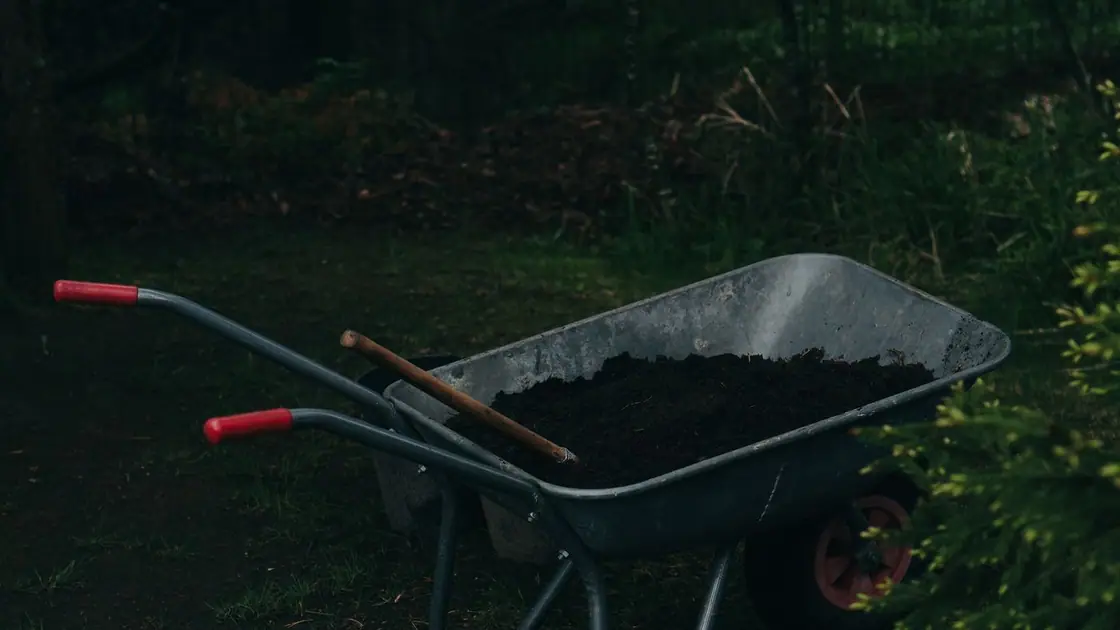
How many wheelbarrows make one cubic yard?
There is no fixed wheelbarrow count because wheelbarrow capacities differ and the usable load is constrained by weight, shape and safe handling. If a wheelbarrow safely carries 3 cubic feet, one cubic yard is the equivalent of nine level 3-cubic-foot loads. A 6-cubic-foot capacity would mathematically require 4.5 loads if the full rated volume is usable.
Do not assume the bin's rated volume is the same as a safe working load. Dense wet soil or rock may exceed a practical lifting limit long before the bin is full. Check the manufacturer capacity and follow safe loading practices rather than making wheelbarrow trips an exact delivery measure.
How many bags make one cubic yard?
Bag counts are determined from the volume printed on the package. One cubic yard equals 27 cubic feet. Therefore, a cubic yard is equivalent to 13.5 bags labeled 2 cubic feet, which requires purchasing 14 whole bags if bags cannot be split. Nine 3-cubic-foot bags equal one cubic yard exactly by labeled volume.
Some products are packaged by weight, particularly concrete or dense aggregates. A 40-, 60- or 80-pound concrete bag does not automatically equate to a fixed cubic-foot volume across every mix. Use the product's mixed yield when calculating bag counts. For landscape mulch, use the mulch calculator to plan area coverage and compare packaging.
Does one cubic yard have a fixed weight?
No. The weight of a cubic yard is determined by bulk density, which can differ greatly across materials and change with moisture, particle size and packing. One cubic yard of wood mulch, wet topsoil and crushed stone occupy equal space but will not weigh the same. That is why a volume-only measurement cannot be accurately converted to tons without material information.
For a supplier quotation in US short tons, multiply cubic yards by a density expressed in US short tons per cubic yard. The cubic yards to tons calculator allows that density to be supplied or edited. Do not use a universal 'one cubic yard = one ton' rule for materials that have different densities.
What bulk materials are commonly sold by cubic yard?
Ready-mix concrete, screened topsoil, mulch, sand, compost and some gravel products are commonly priced or described by volume. Yardage makes it possible to calculate a material quantity from the footprint and thickness of a job. The size of the job determines geometric volume; the material determines whether you need additional delivery or product-specific planning.
Cubic yards are also used in earthwork estimating. A bank cubic yard measures undisturbed material; loose cubic yards measure excavated material; compacted cubic yards measure installed fill in a compacted state. Those states are not guaranteed to contain equal bulk volume and should be distinguished when estimating trucking.
How large an area does one cubic yard cover?
Coverage depends entirely on thickness. Spread uniformly 1 inch deep, a cubic yard covers 324 square feet. At 2 inches it covers 162 square feet; at 3 inches, 108 square feet; and at 6 inches, 54 square feet. Double the thickness and the area covered by the same material volume is cut in half.
These are geometric reference values, not guarantees of how loose material will settle or compact. For more depths and quantities, use the cubic yard coverage chart. If you have actual project dimensions, the main cubic yard calculator can estimate volume directly.
Frequently Asked Questions
Is one cubic yard exactly 27 cubic feet?
Yes. A yard equals three feet, so one cubic yard is 3 × 3 × 3 = 27 cubic feet.
How many cubic yards is one cubic meter?
One cubic meter is approximately 1.30795 cubic yards.
Is a cubic yard the same as a yard?
No. A yard measures length, while a cubic yard measures three-dimensional volume.
How much soil is one cubic yard?
One cubic yard of soil occupies exactly 27 cubic feet of space, but its weight and settled volume vary according to soil type, moisture and how it is handled.
How many wheelbarrows are in one cubic yard?
Nine level 3-cubic-foot loads equal 27 cubic feet mathematically, but the practical number depends on wheelbarrow capacity and safe loading.
How much area does one yard of mulch cover?
At a uniform depth of 3 inches, one cubic yard covers about 108 square feet. The area changes with layer thickness.
Related Calculators and Guides
Continue with a material-specific estimate, convert units, or review the calculation behind your result.